Community

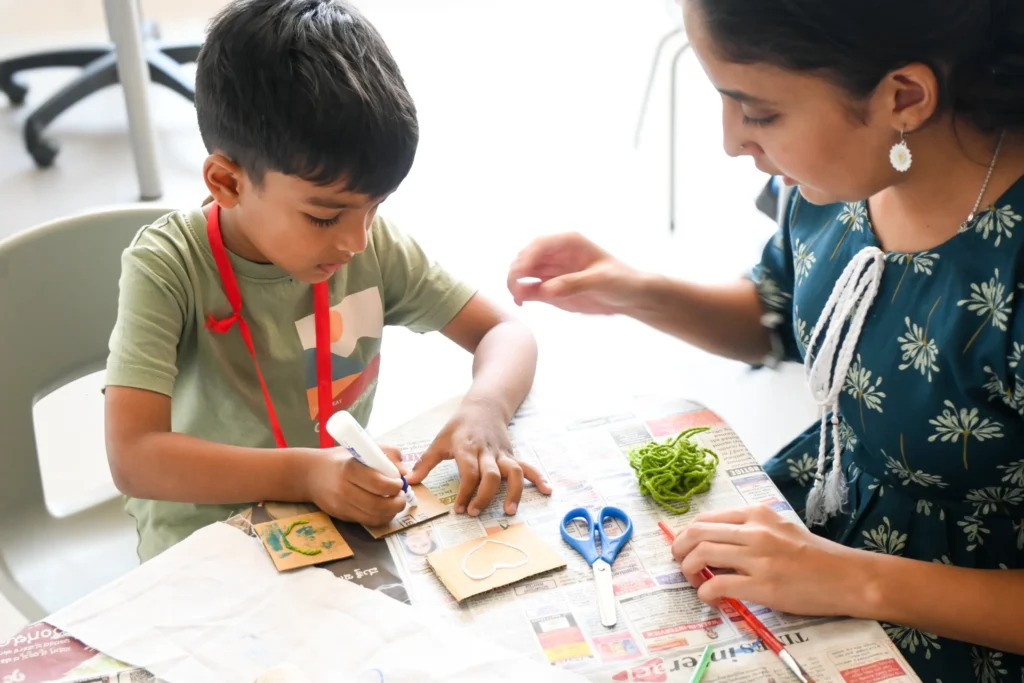
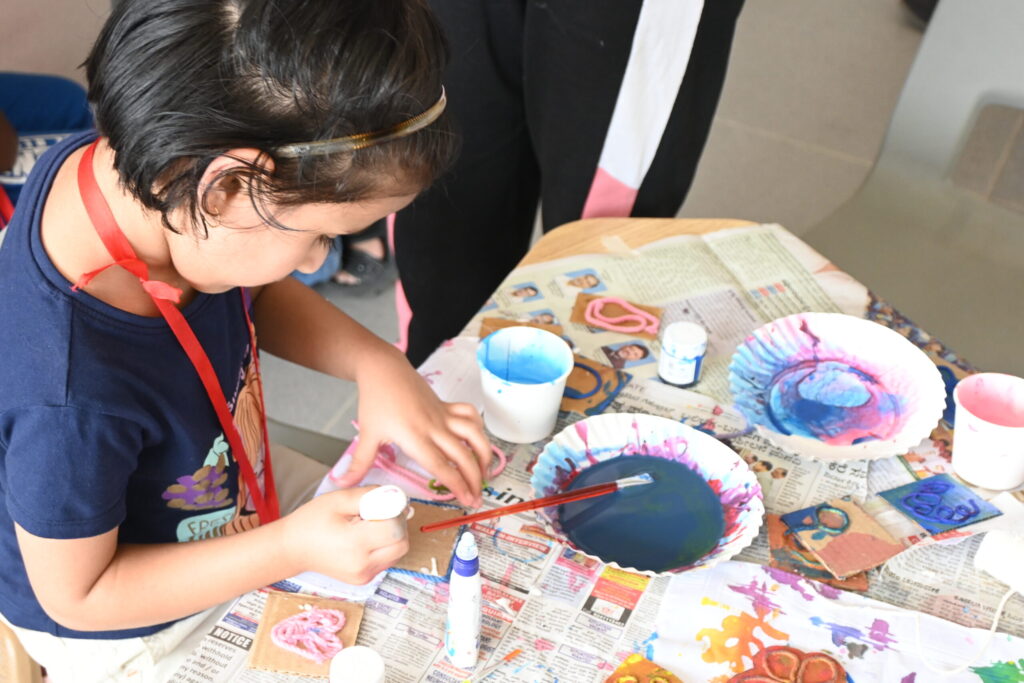
Ekya nava students playing with colors
Blog

How Purpose-Based Learning Supports Creativity and Innovation

Children are naturally curious. They ask why the sky changes colour, how bridges stay strong, why stories make us feel, and what happens when an idea is tested in a different way. Yet in many classrooms, this curiosity can get narrowed into memorising, repeating, and preparing for the next assessment. Purpose-based learning offers a different path: it connects knowledge with meaning, helping learners understand not just what they are studying, but why it matters. For families exploring future-ready education in Bangalore, this approach is especially relevant. At Ekya Nava, located in Panathur on Varthur Road, Bangalore, the focus on creative learning and purpose-based education reflects a broader shift in how children are prepared for a changing world. Academic knowledge remains important, but it becomes more powerful when students learn to apply it, question it, connect it, and create with it. Purpose-based learning encourages creativity and innovation because it gives students a reason to think deeply. When learning is meaningful, children are more likely to take ownership, explore possibilities, and develop original ideas. They begin to see themselves not only as students completing tasks, but as thinkers, makers, problem-solvers, and contributors. What is purpose-based learning? Purpose-based learning is an educational approach that connects classroom experiences to real-world relevance, personal meaning, and broader impact. Instead of learning isolated facts or concepts, students engage with questions, challenges, themes, and projects that help them understand the purpose behind what they are learning. For example, a lesson on water conservation may include science concepts, data analysis, design thinking, civic awareness, communication, and creative problem-solving. Students may investigate water usage, interview community members, design awareness campaigns, or build prototypes for reducing waste. The learning is academic, but it is also connected to life. This makes purpose-based learning different from passive instruction. It asks students to participate actively, reflect intentionally, and make connections across subjects. It also supports meaningful learning because children can see how knowledge applies beyond the classroom. A purpose-based  learning school does not simply add projects at the end of a unit. It designs learning experiences around inquiry, relevance, collaboration, and reflection. The goal is to help students develop both strong foundations and the confidence to use those foundations creatively. The link between purpose and creativity Creativity is often misunderstood as something limited to art, music, drama, or design. In reality, creativity is the ability to generate ideas, make connections, approach problems from new angles, and express understanding in original ways. It is as important in science and mathematics as it is in storytelling or visual arts. Purpose gives creativity direction. When children know why they are solving a problem, their ideas become more thoughtful. They are not creating only to finish an assignment; they are creating to communicate, improve, question, build, or help. In a creative learning curriculum, students may be encouraged to: Ask original questions instead of waiting for ready-made answers Explore multiple solutions to the same problem Combine knowledge from different subjects Build, test, revise, and improve their ideas Present their thinking through writing, models, prototypes, performances, or digital media Reflect on what worked, what failed, and what they would change next time This process helps children understand that creativity is not about getting everything right on the first attempt. It is about experimenting with intention. When students feel connected to a purpose, they are more willing to take creative risks because the work feels worth doing. How purpose-based learning encourages innovation Innovation begins when learners identify a need, imagine a better possibility, and take steps to bring that possibility to life. Purpose-based learning creates the conditions for this because it encourages students to observe the world carefully and respond with ideas. A child studying environmental systems may notice waste in the school community and design a campaign to reduce it. A student exploring local history may create an interactive map or podcast to make stories more accessible. A group working on mathematics may use budgeting concepts to design a model for a community event. These are not just academic exercises; they are opportunities to innovate through learning. Innovation also grows when students learn that problems rarely fit neatly into one subject. Real challenges require interdisciplinary thinking. A strong purpose-based approach blends literacy, numeracy, science, social understanding, technology, design, and communication. This mirrors the way innovation happens outside school, where people must draw from different fields to create meaningful solutions. At Ekya Nava, the emphasis on creative learning and purpose-based education supports this mindset. Students are encouraged to see learning as active and connected, not limited to textbooks alone. This helps them build the habits needed for an unpredictable future: curiosity, adaptability, empathy, collaboration, and independent thinking. Why intentional learning is essential Purpose-based learning works best when it is paired with intentional learning. Intentional learning means students are aware of what they are learning, why they are learning it, and how they can use it. It also means educators design experiences with clear goals, thoughtful questions, and opportunities for reflection. In a traditional model, students may complete activities without fully understanding their value. In an intentional learning environment, every experience has a reason. A discussion builds communication skills. A field observation develops inquiry. A prototype strengthens design thinking. A group project teaches collaboration and responsibility. Reflection helps students recognise growth. Intentional learning does not mean every moment is rigidly planned. In fact, it often creates more space for creativity because students understand the learning goals and can explore different pathways to reach them. They understand the goal while having the freedom to choose how they investigate, create, and demonstrate understanding. This balance between structure and freedom is important. Too much structure can limit creativity. Too little structure can make learning feel unclear. Purpose-based education offers a thoughtful middle ground by giving students meaningful direction while still allowing exploration. What meaningful learning looks like in practice Meaningful learning happens when students connect new ideas to their experiences, questions, and understanding of the world. It is deeper than memorisation because it stays
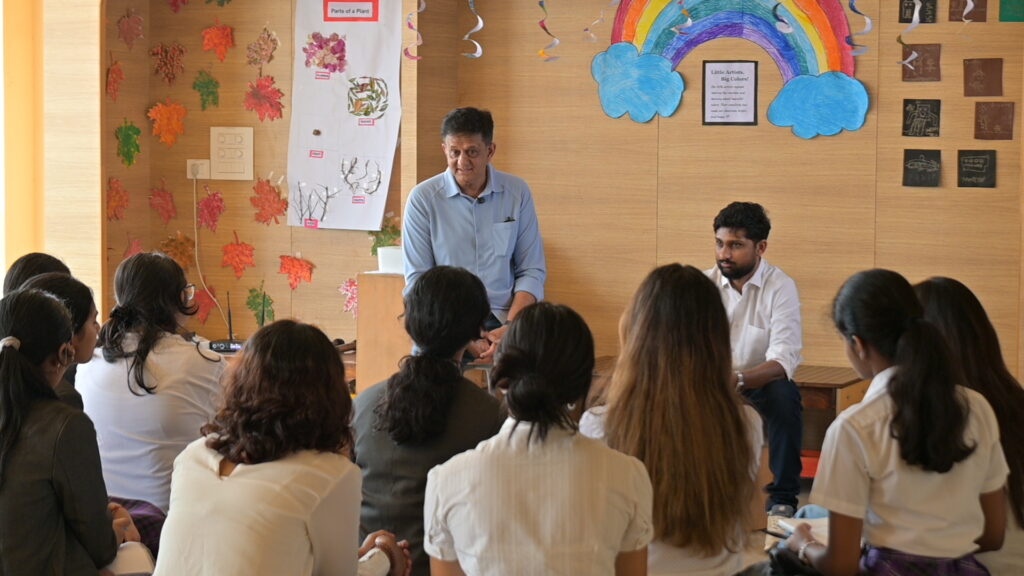
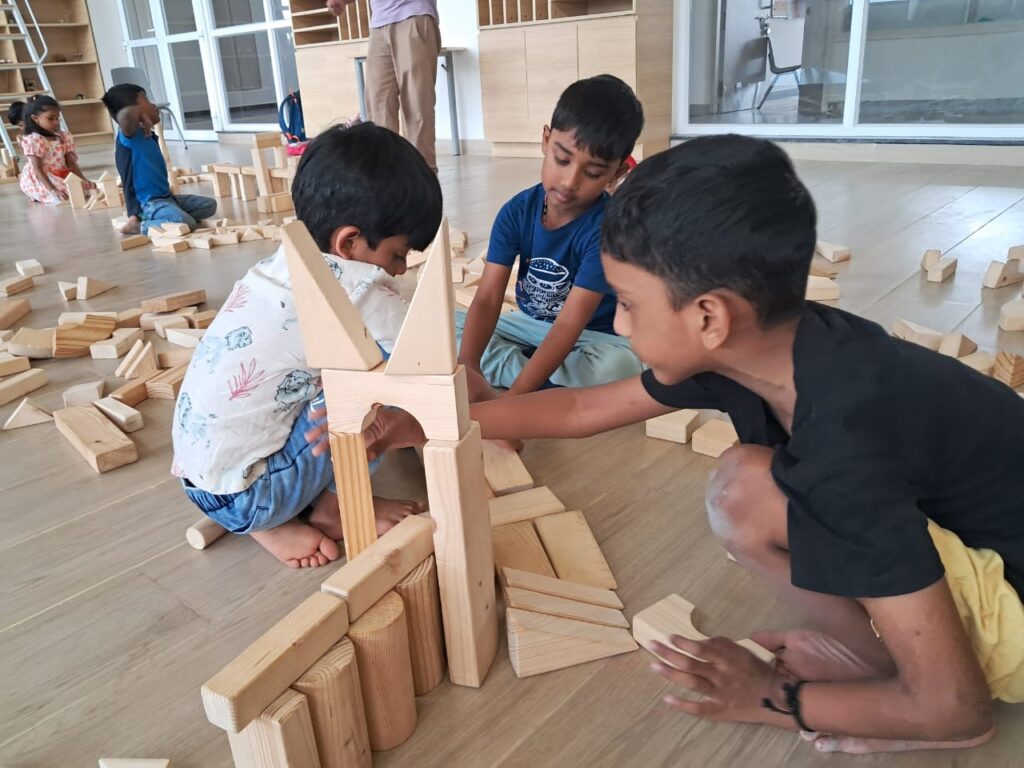
Ekya nava students playing with colors
Blog

What Makes a Design Thinking School Different from Traditional Schools?

For many parents, choosing a school is no longer only about board affiliation, campus size or exam results. Families are increasingly asking a deeper question: Will this school help my child think, adapt, solve problems, and find purpose in a changing world? This is where a design thinking approach to education becomes relevant. A design thinking school is not simply a school that adds creative projects to the timetable. It is a learning environment where students are encouraged to observe, question, empathise, experiment, reflect, and improve. Instead of treating knowledge as something to memorise, it helps learners use knowledge to understand real situations and create meaningful solutions. Traditional schools and design thinking schools can both offer strong academics. The difference lies in how learning is experienced, how students engage with problems, and how success is defined. What Is a Design Thinking School? A design thinking school uses the principles of design thinking as part of its learning culture. Design thinking is a human-centred approach to problem-solving. It typically involves understanding people and contexts, identifying problems, generating ideas, building prototypes, testing solutions, and refining them based on feedback. In a school setting, this approach helps students move beyond “What is the right answer?” to questions such as: Who is affected by this problem? Why does this challenge exist? What information do we need before forming an opinion? How might we create a better solution? What can we learn from trying, failing, and improving? This kind of learning builds curiosity, resilience, collaboration, and critical thinking skills. It also helps students see a connection between classroom concepts and the world around them. How Traditional Schools Usually Approach Learning Traditional schooling has often been organised around structured lessons, textbooks, examinations, and subject-specific instruction. This model can provide clarity, discipline, and a strong academic foundation. Students learn established concepts, practise skills, and demonstrate understanding through assignments and tests. However, in many conventional settings, learning may become heavily focused on completing the syllabus, scoring well in examinations, and reproducing information accurately. Students may not always have enough opportunities to explore open-ended problems, make choices, work across disciplines, or apply learning in unfamiliar contexts. In highly examination-led environments, students may become confident in answering structured questions while receiving fewer opportunities to frame questions of their own. A design thinking school aims to balance academic rigour with inquiry, creativity, and purposeful application. Learning Begins with Questions, Not Just Answers One of the clearest differences in a design thinking school is the way learning begins. Instead of starting only with a chapter, formula, or definition, students may begin with a real-world challenge, observation, or inquiry. For example, a lesson on water conservation may not be limited to reading about natural resources. Students might investigate water use at their school or in their neighbourhood, interview people, analyse patterns, and propose practical ways to reduce waste. Along the way, they apply science, mathematics, communication, research, and social understanding. This approach does not ignore academic content. Rather, it gives content a purpose. Students learn because they need knowledge to understand and respond to something meaningful. Experiential Learning Is Central Experiential learning is one of the foundations of design thinking education. Students learn by doing, testing, reflecting, and improving. This may include field observations, projects, experiments, simulations, exhibitions, discussions, prototypes, service learning, and collaborative challenges. In an experiential learning environment, mistakes are not treated as the end of learning. They become part of the process. A prototype that does not work is an opportunity to ask why. A group discussion that leads to disagreement becomes a chance to understand different perspectives. A project that needs revision helps students build persistence and flexibility. This is especially important for K–12 learners because it develops both academic and life skills. Children begin to understand that learning is active, iterative, and connected to their choices. Students Develop Empathy Alongside Knowledge Design thinking begins with empathy. Before solving a problem, students are encouraged to understand the people, communities, and contexts involved. This creates a more human-centred learning experience. For instance, if students are designing a solution for accessibility on campus, they first need to understand the experiences of people who face mobility challenges. If they are exploring food waste, they may speak with cafeteria staff, students, and families to understand behaviours and constraints. This process helps students develop social awareness and responsible decision-making. They learn that good solutions are not just clever; they are useful, inclusive, and thoughtful. Critical Thinking Skills Are Built Through Real Problems Parents often look for schools that develop critical thinking skills, but the term can feel broad. In a design thinking school, critical thinking is practised through repeated opportunities to analyse, question, compare, and evaluate. Students may be asked to: Distinguish between assumptions and evidence Research multiple viewpoints Identify the root cause of a problem Test whether an idea works in practice Reflect on what could be improved Explain their reasoning clearly These habits are valuable across subjects. Whether a student is studying literature, science, economics, design, mathematics, or global issues, critical thinking helps them move from passive learning to active understanding. The Teacher’s Role Changes In a traditional classroom, the teacher is often the primary source of information. In a design thinking school, the teacher remains essential, but the role expands. Teachers become facilitators, mentors, and learning designers. They guide students with questions, structure inquiry, introduce relevant concepts, support research, and help learners reflect. They still teach important knowledge and skills, but they also create space for exploration and student agency. This shift helps students become more independent. They learn how to plan, investigate, collaborate, manage time, seek feedback, and take ownership of their learning. Assessment Looks at Process as Well as Outcome Traditional assessments often focus on final answers, grades, and examination performance. These remain important, especially in recognised curricula such as IB and IGCSE. However, design thinking schools also pay attention to the learning process. Students may be assessed on how they define a problem, conduct research, collaborate with

Blog

IGCSE vs IB in Bangalore: Which International Curriculum Fits Your Child’s Future?

There’s a moment almost every parent in Bangalore experiences today. It usually begins after a school tour, somewhere between hearing terms like inquiry-led learning, international exposure, holistic education, and future-ready curriculum. You walk out holding brochures, fee structures, curriculum charts, and by evening you’re back on your laptop, quietly scrolling through lists of the top IB schools in Bangalore, then switching tabs to look up the good IGCSE schools in Bangalore. Suddenly one question starts feeling heavier than expected: “Should my child study IGCSE or IB?” At first glance, both seem similar. Both are internationally recognised. Both promise global opportunities. Both move beyond rote learning. But once parents begin researching, the confusion grows deeper. One school says IB develops thinkers. Another says IGCSE builds strong academic foundations. Someone in a parent WhatsApp group, often one of those active ones comparing international schools in Whitefield Bangalore, says IB is stressful. Another insists the IGCSE schools in Whitefield Bangalore are better suited for competitive exams. Somewhere in the middle of all this information, parents are simply trying to understand what will genuinely help their child grow. The truth is, choosing between IGCSE and IB is not about selecting the “harder” or “smarter” curriculum. It is about understanding how your child learns best. The truth is, choosing between IGCSE and IB is not about selecting the “harder” or “smarter” curriculum. It is about understanding how your child learns best. Think of it this way. Some children naturally enjoy structure. They like clarity, measurable progress, and knowing exactly what is expected of them. They feel confident when subjects are clearly defined and concepts are mastered step by step. Other children are naturally exploratory. They ask unexpected questions at the dinner table, connect ideas across subjects, and enjoy discussions more than memorisation. They are energised by projects, presentations, research, and open-ended thinking. That difference is often where the IGCSE and IB conversation truly begins. The IGCSE (International General Certificate of Secondary Education) curriculum is known for offering strong academic grounding with flexibility across subjects. It gives students the space to build depth in individual disciplines while developing analytical and conceptual understanding. For many students, this structure creates confidence. It allows them to understand subjects independently before connecting them to larger ideas later on. A child who enjoys Mathematics, Science, technical subjects, or academic precision often thrives in this environment because there is clarity in progression and assessment. Parents also appreciate that IGCSE creates a strong base for future academic pathways while still encouraging application-based learning. IB (International Baccalaureate), on the other hand, approaches learning differently. Rather than treating subjects as separate silos, IB encourages students to see relationships between ideas, people, systems, and the world around them. It places strong emphasis on inquiry, reflection, communication, and independent thinking. An IB student may not simply study environmental science from a textbook. They may discuss sustainability through economics, ethics, design, and global policy simultaneously. The learning becomes less about “finding the right answer” and more about understanding why problems exist and how ideas connect. For some children, this is incredibly exciting. Especially students who enjoy discussion, creativity, collaboration, and self-directed learning. These are often the children who constantly ask “why,” who enjoy expressing opinions, and who feel motivated when learning feels connected to real life. And perhaps this is why the conversation around international curricula has become so relevant in Bangalore today. Parents are no longer only thinking about marks and report cards. They are thinking about adaptability. Communication. Confidence. Emotional resilience. Problem-solving. They are asking themselves whether education is preparing children for the kind of world they will actually inherit.Today’s children may work in industries that do not fully exist yet. They may collaborate globally, switch careers multiple times, work alongside AI systems, or solve problems we cannot yet predict. In such a world, education cannot remain limited to memorisation alone. When you walk through a school, notice the children.Sometimes the culture of a school tells you more than the curriculum itself. Some children are naturally curious and jump headfirst into ideas. Others need time, reassurance, and the confidence that it’s okay to make mistakes before they begin exploring fully. Think about how differently children learn to ride a bicycle. One child removes the training wheels immediately and races ahead fearlessly. Another takes a few extra days, looks back every few seconds, and only lets go when they truly feel balanced. Neither child is behind. They simply need different environments to grow with confidence.  But children are far more layered than report cards. A child deeply interested in design may someday become an architect, product innovator, filmmaker, or entrepreneur. A student constantly dismantling gadgets at home may actually be developing engineering instincts. School for Innovation, Creativity and Design would be an ideal place to nurture this child. To develop their skill in design to pave the path for their future. This is why the learning environment matters far more than the label of the curriculum itself. At Ekya Nava, the idea is not to force children into a system. It is to create a space where different kinds of learners can find their rhythm through specially curated pathways while still building strong academic foundations through IB and IGCSE. Through pathways like Design, Making, IT & Society, Innovation & Entrepreneurship, students don’t just study concepts theoretically. They build, question, prototype, create, collaborate, and apply what they learn in meaningful ways. Because the future will not only reward children for memorising answers. It will reward those who have a strong academic foundation and have the ability to ponder on how to think, adapt, communicate, and solve problems with empathy and confidence. A school where thinkers become makers. Because in the end, school is only the medium. What truly matters is the kind of path we let them pave for themselves!Come understand more at our Campus!  FAQ:  Which is better: IGCSE or IB? Neither is universally “better.” IGCSE offers stronger academic structure and subject depth, while IB focuses more on inquiry-led, interdisciplinary learning. Which

Blog

The Kind of Summer Every Child Deserves

In the summer heat of May, somewhere in Bangalore, afternoons stretch a little longer than usual. The fan hums in the background, the sun sits stubbornly outside, and time feels like it has slowed down just enough to be noticed. Inside homes, there’s a quiet lull, but not for long. Because for a child, summer doesn’t stay still. It spills. A five-year-old doesn’t wake up with a plan for the day. There’s no checklist, no outcome waiting at the end of it. Just a simple, restless thought, what can I do right now? And that thought keeps changing. A drawing begins, becomes something else, and is left halfway. A game starts with rules, then new rules, then no rules at all. A half-built fort is forgotten because something outside suddenly feels more exciting. So many ideas. So many beginnings. And so many things that just fade into the day. And yet, none of it feels wasted. That’s the part we often miss as adults. We feel the need to step in, to guide, to complete. To turn every moment into something finished, something measurable. But childhood summers were never about finishing. They were about the freedom to begin, again and again, without consequence. Like letting mango juice drip down your elbow and not rushing to wipe it. Like running for no reason and not needing one. Like saying “I’m bored” and then, somehow, finding yourself in the middle of something completely unexpected a few minutes later. And in all of this, there’s a quiet kind of satisfaction. Not the loud kind that comes from completing something, but a softer feeling that settles in by the end of the day. I did something today. Even if it didn’t last. Even if it didn’t make sense to anyone else. The day still feels full. Maybe that’s where we get summer a little wrong now. We try to design it too perfectly. Fill it with structure, with outcomes, with activities that neatly fit into time slots. But summer was never meant to be neat. It was meant to wander, to overlap, to leave space for interruptions and half-formed ideas. And yet, there was a time when summer camps felt like an extension of this very feeling. Not a place to be managed, but a place to be free. You can almost hear it in the way children talk about it, in the little details they hold on to. Ishaan and Darsh still light up when they speak about last summer, about how going back home always felt a little too soon. There was something about those days that made them want to stay just a little longer. The same piece of cardboard would find its way back into their hands every day, becoming something new each time. A car one day, a spaceship the next, and then something else entirely, shaped only by whatever they felt like making in that moment. It didn’t need to be anything more than that. And then there were Reyansh and Aaron, who arrived quietly, almost blending into the background at first. Their days began gently, with small moments of noticing and trying. And slowly, almost without anyone realising when it happened, they began to open up. A question lingered a little longer, a thought found its way out, a moment of curiosity turned into something they wanted to share. And somewhere along the way, without it being noticed all at once, they weren’t on the edges of the room anymore. They had gently found their way in, settling into a space that felt safe enough to simply be themselves. Isn’t that what summer should feel like? A place where young minds are not hurried. Where innocence is not corrected too quickly. Where ideas, even the fleeting ones, are allowed to exist long enough to become something. Innocence does not see restrictions. It only sees possibility. And sometimes, all it needs is the right space to unfold. Summers like this don’t just pass. They stay. They turn into stories, into confidence, into a quiet belief that I can try. That I can make. That I can be. And that’s what summers at Ekya Nava are beginning to look like. For parents exploring the best summer camps in Bangalore, especially those looking for summer camps for young kids, the search often begins with what a child will learn. But what truly stays is how a child feels through it. Whether it is through moments that feel like art and craft summer camps, or simple everyday explorations that quietly turn into something more, the focus remains on giving children the space to begin. A space where children don’t just attend, but arrive with excitement. Where they remember what it felt like the year before and come back wanting more. Where days are not just planned, but experienced. Where ideas are not rushed, but allowed. This summer is only growing from there. Bigger in spirit. Softer in approach. Brighter in the way children carry it back home with them. Because summer should not feel like another schedule. Summer should feel like summer again.

Community

The Wrap Around Program: Nurturing Holistic Well-being Beyond Academics

The sound of the last school bell is usually a signal of release, the scuffle of shoes toward the gate, a rush of children back into the world of traffic, playdates, and homework. At Ekya Nava, it signals something else: the beginning of another kind of school day. Here, the hours after dismissal are a continuation of learning. In one corner of the campus, a group of children rehearses a dance sequence. Just down the hall, a quiet cluster bends over LEGO robotics kits, while the gym hums with the rhythm of basketball practice. Teachers hover, not to assign or grade, but to encourage, guide, and sometimes join in. This is the Wrap Around Program in one of the best K12 schools in Bangalore. Ekya Nava has the answer to a question many parents quietly ask: what if school weren’t just about academics, but also about the lives our children lead outside of school? A Philosophy Beyond the Classroom The program sits at the heart of what makesinternational schools in Bangalore distinct. For years, parents seeking the best schools have asked for a balance between rigor and rest, between structure and freedom. At Ekya Nava, balance is a design principle. The Wrap Around Program extends the school’s philosophy into the late afternoons. The goal is simple yet ambitious: to help children grow not only as learners, but as individuals who can move fluidly between worlds; the world of equations and essays, and the world of expression, movement, and craft. What That Looks Like  On any given day, the program offers a mosaic of experiences: Sports: Basketball, table tennis, gymnastics, karate; activities that train the body, resilience, patience, and teamwork.  Arts: Dance, music, drama; spaces where children learn rhythm, confidence, and the art of presence. Skills & Innovation: Coding, robotics, debating, design thinking; disciplines that shape the builders, speakers, and problem-solvers of tomorrow. Quiet Pursuits: Chess or public speaking practice for those who prefer strategy or self-expression to the rush of physical play. It’s a catalogue that reflects variety and purpose. Each option is a pathway. Why It Matters  The best K12 schools in Bangalore today know that academic performance is no longer the sole ticket to opportunity. Schools must cultivate the full.  After-school programs have long been another typical add-on for parents: private lessons scattered across the city, weekend workshops squeezed into tight schedules. Ekya Nava embeds these experiences within the school day and removes the fragmentation. Learners can explore, fail, and try again in the same supportive ecosystem that guides their academics. The result, teachers say, is not just skill acquisition but transformation. A quiet child blossoms on stage. A restless one finds discipline in karate. Another discovers, in the sound of robotic gears, a love for engineering. A Different Kind of Homework If traditional homework prepares children for the next test, the Wrap Around Program in one of the top schools in Bangalore prepares them for something harder to measure: life. It teaches them how to belong to a team, how to handle disappointment gracefully, how to see possibility in failure, how to carry themselves with presence, lessons not captured in grades but felt in character. And perhaps that is the quiet genius of Ekya Nava’s approach. In reimagining what happens after the bell, it reminds us that education is not confined to classrooms, nor is it ever truly over. FAQs Q1. Who can join the Wrap Around Program? It is open to learners across grades, with activities tailored to age groups and interests. Q2. How does Ekya Nava choose which activities to include? Each is selected for its ability to nurture physical, emotional, and intellectual growth through sports, arts, or innovative skill-building. Q3. Will participation affect my child’s academics? The program complements academics by enhancing focus, discipline, and curiosity, without adding pressure to a child’s schedule. Q4. What makes this different from private after-school classes? Here, activities are integral to the school community, with expert instructors and a safe environment for all Q5. How does the program fit into Ekya Nava’s larger philosophy? It mirrors the school’s belief that learning is a lifelong journey, stretching beyond textbooks into experiences that shape character.

Community, Blog

Purpose-Based Schools in Action: A Day in the Life at Ekya Nava

“What if purpose were the purpose of education?” This question, was posed by Dr. Heather Malin, Director of Research at the Stanford Center on Adolescence, in her 2018 book, Teaching With Purpose, captures a powerful truth. Malin defines purpose as “a future-directed goal that is personally meaningful and aimed at contributing to something larger than the self.” With such a sense of purpose, she explains, young people are more motivated to develop the skills and expertise they need to thrive in education, careers, and life. Purpose-based schools are quickly gaining popularity in India, but Ekya Nava, one of the top purpose-based schools in Bangalore, was the first to lead this transformation. Let’s learn more about what it looks like to be in such a unique school environment.  Inside a Day at Ekya Nava Ekya Nava offers learners purpose and connects learning to the real world. Their novel purpose-based learning connects a philosophy with the Cambridge IGCSE for Grades 1–10. The school has also incorporated a continuous, globally recognised pathway with the help of the broader Ekya/CMR ecosystem. Their proposition is both ambitious and rooted in long experience. What “purpose-based” looks like here Ekya Nava’s core curriculum is designed using Understanding by Design (UbD). UbD emphasises in-depth understanding of learning areas, transfer of learning, and real-world application. The model also develops critical thinking through immersive projects, workshops,hands-on learning experiences, field trips, and multidisciplinary performance assessments. Learners are therefore encouraged to ask questions, think critically, and apply knowledge in meaningful ways. A typical rhythm The school follows flexible timings from 8:00 AM to 3:00 PM, which shapes the routine. That’s not it. After school, learners can opt into certified activities such as basketball, dance, music, karate, gymnastics, Lego robotics, table tennis, chess, public speaking, coding, and debating. This diverse schedule suggests a campus that is active, thriving, and always willing to innovate.  Intention at the Epicentre An Ekya Nava class typically comprises activities and processes that focus on empathy, curiosity, adaptability, and compassion. Children don’t just rush into textbooks. Instead, the practices are meant to make learning exciting and helpful in real-life scenarios. For example, Early Years learners (2.5-6 years) follow the QUEST program where they participate in sensory-rich experiences that are specially designed to spark genuine interest in learning. You can explore more about the QUEST curriculumand how it nurtures young learners for more clarity. This purposeful start ensures that learners spend their day with clarity and focus. Pathways for Purposeful Learning At Ekya Nava, learners of all ages engage with as many as four real-world pathways. These pathways may be invisible, but they play a crucial role in helping discover their interests and develop future-ready skills. Each pathway connects knowledge with practical application, so they’re encouraged to think, create, and contribute meaningfully. This balance of breadth and depth ensures that learners from top schools in Bangalore, such as Ekya Nava, develop the adaptability to thrive in an evolving world. Spaces That Inspire At Ekya Nava, the campus itself becomes a teacher. Every corner has been purposefully designed to inspire the learners. For instance, exposed building surfaces reveal the inner workings of mechanical systems, helping students understand how design meets function. The cascading atrium serves as a vibrant hub of energy and innovation, while expansive Maker Labs and a dedicated Design Lab invite learners to experiment, prototype, and bring ideas to life. Learning Beyond the Classroom Some of the most powerful lessons at Ekya Nava happen once students step outside their classrooms.  Several times a year, learners from each class will be seen working on a community project, spending a night under the stars at camp, or shadowing professionals in real workplaces. These experiential learning opportunities are integral to a purpose-based approach. Why Ekya Nava Stands Out While many Best schools in Bangalore offer international curricula, Ekya Nava’s distinction lies in its  commitment to purpose. Their design-driven learning spaces and emphasis on collaboration empower learners to align with the school’s core process: Learn, Think, and Do with clarity and intent. For parents exploring international school admission in Bangalore, Ekya Nava is an ideal choice as it’s driven by a novel philosophy of education that blends global curriculum standards with values-driven practices. FAQs 1. What makes Ekya Nava special? It’s India’s first purpose-based international school, blending global curricula with hands-on, real-world learning. 2. What is purpose-based learning? It’s about learning with meaning, through projects, field trips, and experiences that connect lessons to life. 3. What pathways can Ekya Nava learners choose? There are four exciting ones: Design, Making, Innovation & Entrepreneurship, and Information Technology & Society. 4. Do students learn beyond the classroom? Yes! Through community projects, camps, internships, and after-school activities like robotics, coding, sports, and many more.  5. How do I apply for admission? Just enquire online or visit the campus, submit an application, complete the assessment, and you’re guided through enrolment.

Community, Blog

Evergreen Content Spotlight: Best IGCSE Schools Near Me

Not long ago, classrooms were defined by chalk dust, neat rows of desks, and the rhythmic recitation of memorised lessons. Success meant reproducing facts on paper, not necessarily questioning them. Parents who grew up in such settings, education was about conformity. Today, as parents search for the best IGCSE schools in Bangalore, the definition of a good education has shifted. Rote memorisation is no longer enough; the world demands learners who can adapt, question, collaborate, and innovate. That is where Ekya Nava’s Cambridge IGCSE program sets itself apart. We blend global recognition with a local philosophy of purpose and empathy. Purpose in Every Lesson More than content coverage, the program thrives on purpose-based learning. Lessons are framed around real-world contexts that push learners to reflect, connect, and act. For example: This blend helps learners internalise the idea that academics are stepping stones to responsible action. Critical Thinking in Action We believe that the hallmark of top-rated International schools in Bangalore is cultivating critical thinking skills. In the IGCSE classroom, learners are encouraged to debate ideas, test hypotheses, and draw conclusions independently. A history lesson may unfold not as a list of dates, but as a discussion on cause, consequence, and perspective. This approach nurture skills such as: These habits of mind enable learners to thrive in higher education and beyond.Curious about how critical thinking turns into lifelong skills? Discover our Quest Program and see how critical thinking transforms into action. The Power of Design Thinking Equally important is our emphasis on design thinking. Learners at Ekya Nava work on challenges that mirror real-world issues: Such projects invite experimentation and iteration, teaching resilience in the face of failure and creativity when finding solutions. For parents comparing the best international schools in Bangalore, this problem-solving mindset we impart in children often becomes a deciding factor. Hands-On Learning That Lasts The IGCSE framework at Ekya Nava is also deeply experiential. Through hands-on learning, be it in labs, field trips, or explorations, concepts move beyond the page. Your child might: This approach ensures that knowledge is absorbed as lived experience in Ekya Nava.  An Education That Travels With Your Child Recognition of the Cambridge IGCSE by leading universities worldwide ensures that the pathway remains open, whether learners aim for higher education in India or abroad. Yet parents often remark that what distinguishes top schools in Bangalore like Ekya Nava is less the credential and more the confidence, curiosity, and compassion their children carry forward. FAQs Q1. What makes Ekya Nava one of the best IGCSE schools in Bangalore? Ekya Nava combines the globally recognised Cambridge IGCSE curriculum with purpose-based learning, hands-on projects, and a focus on critical thinking skills, preparing learners for both higher education and real-world challenges. Q2. How is the IGCSE curriculum different from other boards like CBSE or ICSE? Unlike traditional boards that often focus on memorisation, IGCSE emphasises application, analysis, and inquiry-based learning. At schools like Ekya Nava, this translates to lessons that connect directly with real-world contexts. Q3. Does the IGCSE program help my child get into universities abroad? Yes. The Cambridge IGCSE is accepted by leading universities worldwide. Students from the best international schools in Bangalore are well-positioned to pursue higher studies in India or overseas. Q4. How does Ekya Nava use design thinking in classrooms? Learners take on real-world challenges, like sustainability, transport, or urban spaces, using design thinking frameworks. This teaches creativity, problem-solving, and resilience in ways that go beyond textbooks. Q5. Are there opportunities beyond academics at Ekya Nava? Yes. Alongside the IGCSE curriculum, learners participate in the Quest Program, arts, sports, and community initiatives, ensuring holistic growth and not just academic preparation.

Community, Blog

Deep Dive: How IGCSE Prepares Students for Global Universities

Why IGCSE Matters More Than Ever A decade ago, parents often imagined traditional professions, such as a doctor, engineer, or lawyer, when dreaming of their child’s future. Today, the landscape has shifted. According to the World Economic Forum, 65% of children entering primary school will end up in jobs that do not yet exist. To prepare students for this exciting but uncertain world, we must move beyond rote learning. The future demands adaptability, creativity, and global competence. This is where the Cambridge International General Certificate of Secondary Education (IGCSE) shines. Recognised worldwide, IGCSE has become the go-to curriculum in many of the best international schools in Bangalore, bridging the gap between secondary schooling and admission to global universities. The Big Picture: IGCSE in India and Beyond Did you know that there are over 70 subjects offered at IGCSE, including 30 languages? Schools can customise combinations to meet student interests and institutional needs. No two IGCSE journeys look the same, and that’s by design. Globally, IGCSE has been adopted by thousands of schools across 160 countries. In India alone, close to 700 schools now offer the IGCSE curriculum, making it one of the fastest-growing academic boards in the country. For parents looking at top K12 schools in Bangalore, this growth signals trust: IGCSE is a proven pathway to universities across the UK, US, Singapore, Australia, and beyond. Academic Depth with Flexibility At its core, IGCSE provides breadth and rigour: This academic design makes IGCSE a springboard to advanced studies, such as A Levels, IB Diploma Programme, or college preparatory courses. Life Skills That Stick What sets IGCSE apart from conventional programs is its emphasis on skills for life: At Ekya Nava, these skills are further reinforced through design thinking and hands-on learning experiences that make the curriculum personal. A Global Outlook for Global Futures Cultural awareness is embedded in the IGCSE structure. Case studies, projects, and discussions invite learners to consider international perspectives. They learn to respect diversity, challenge biases, and see issues through multiple lenses. When a student aspires to study abroad, this exposure is critical. Universities look for applicants who can thrive in multicultural classrooms, collaborate across differences, and lead with empathy. Why Universities Value IGCSE GraduatesGlobal universities, from Oxbridge to the Ivy League and top Asian institutions, consistently seek out IGCSE graduates from the best high schools in Bangalore. Why? These students demonstrate academic resilience, subject mastery, adaptability in diverse classrooms, and a powerful balance of analytical thinking and creativity.

Blog, Community, News

Exclusive: Insights from Our Student Well-being Counsellors

If you ask students what makes school feel like home, the answer isn’t always in the classrooms or report cards. It’s in the people who listen, care, and remind them that it’s okay to pause and breathe. Best international schools in Bangalore apply this philosophy with the help of a compassionate team of in-house counsellors who make sure every learner feels seen, supported, and safe to grow intellectually and emotionally.  The Heart Behind Wellness Programs Academic institutions, including top K-12 schools in Bangalore, that treat well-being as the heartbeat of their programs, have been attracting attention recently. For instance, Ekya Nava is a pioneer in designing curriculum centred around student well-being. The idea is to help students flourish academically, emotionally, and socially. This way, they combine emotional intelligence, ethical values, and social skills with academic achievement. What Happens Behind the Scenes Ekya Nava has a panel of expert well-being counsellors who describe their work as “listening deeply and responding gently.” They regularly conduct one-on-one sessions, group workshops, or mindfulness breaks during the school day; their role is to help children regulate emotions, resolve conflicts, and build resilience. Each week, students participate in activities that nurture self-awareness. Sometimes, it’s journaling in their Find Journal, and other times, it’s about practicing mindfulness through sensory awareness or deep breathing. These small moments of reflection often become transformative for their learners. You can learn more about Find Journal here.   The Help Now! strategies, for instance, allow students to use quick and simple techniques, such as noticing three sounds around them or drinking water mindfully, to return to calm when they feel overwhelmed. Such practices may seem simple, but they empower children to understand their feelings, rather than suppress them. Well-being Is a Shared Journey Nurturing well-being is a school’s responsibility. It’s also a partnership between educators, students, and families. That’s why schools like Ekya Nava host monthly awareness sessions on mental health, resilience, and self-care, along with parent sessions that offer insights into supporting emotional development at home. Every Friday, parents are invited to connect directly with our counsellors through Parent Open Lines, creating an open channel for conversation, guidance, and collaboration. This approach ensures that students receive emotional support while they live in an environment that models it. It’s one of the USPs that distinguishes Ekya Nava as a unique international school in Bangalore. For the school, emotional well-being is as integral to the curriculum as math or science. The Science of Happiness Meets the Art of Care Well-being at Ekya Nava draws from both hedonic (joy-based) and eudaimonic (purpose-based) approaches to happiness, teaching children to find joy in small moments while cultivating long-term purpose and meaning. Through this balanced approach, students learn to manage stress, build empathy, and find inner motivation, essential skills for thriving in the modern world. As one of the top 12 schools in Bangalore, Ekya Nava integrates research-backed practices, such as mindfulness, emotional regulation, and social inclusion into daily life. These tools for life help students grow into confident, compassionate individuals who can handle complexity with calm and clarity. Where Education Meets Empathy Every day at Ekya Nava, the well-being team quietly transforms lives, helping a student overcome test anxiety, guiding a friendship through conflict, or simply offering a listening ear. Their work reflects what parents of today believe at our core: that education is about preparing children for exams and for life. As the world moves too fast, Ekya Nava endorses the need to slow down, reflect, and connect. These are vital acts of learning  we don’t usually see schools prioritise. It’s this philosophy that makes them one of the top schools in Bangalore  for what they teach and how they help children feel while they learn. Because when a student feels safe, supported, and seen, they thrive.

News, Community

Information Technology & Society: Equipping Students for the Digital Age

Today’s students don’t just use technology; they live in it. It’s the space where they learn, play, question, and form opinions. At Ekya Nava, one of the best IGCSE schools in Bangalore, our Information Technology & Society (ITnS) pathway helps children make sense of this complicated digital world, how it works, why it matters, and how it is reshaping communities, cultures, and the choices we make every day. Instead of teaching technology as a standalone subject, ITnS blends computing, ethics, data, society, and human behavior into one meaningful lens. Students build a strong foundation in computing systems, data analysis, networks, algorithms, and programming, all while understanding the social impact behind every tool they use. Where Technology Meets Humanity What makes ITnS different from the best international schools in Bangalore is its multidisciplinary mindset. A session on algorithms becomes a conversation about fairness and bias. A lesson on networks naturally leads to discussions on privacy, security, and digital citizenship. When students explore AI, they also question its ethical boundaries and real-world consequences. It’s learning that asks not just “How does this work?” but also “What does this mean for people?” With concepts like ethical AI, digital literacy, and the digital divide woven into everyday learning, students learn to think critically and act responsibly. Acquiring these skills mean far more than simply knowing how to code. A Middle School Foundation for Real-World Readiness At Ekya Nava, every middle schooler takes the ITnS pathway. As the digital landscape is impossible to avoid, this has become a life skill, just like reading or numeracy. Students learn to: And for learners curious to go deeper, ITnS can be paired with other interest-led pathways, giving them the freedom to explore where their passions and talents overlap. Purpose-Based Learning in Action ITnS thrives because it is centred around Ekya Nava’s bigger philosophy of purpose-based learning, where learning is designed to be relevant, reflective, and connected to the world outside the classroom. Students in such leading IGCSE schools in Bangalore don’t just “learn technology”, they use it. In The Park, our dynamic studio space, learners investigate the relationship between tech and society, design for social impact, explore ethical questions around AI, and examine the digital divide through hands-on projects. They learn, think, and do, three core practices embedded in the pathway. Analysing data, prototyping solutions, or debating digital rights allow students to see technology as a tool for: Spaces Designed to Support Future Thinking Even the learning environment supports this digital awareness. Ekya Nava’s open studios, cutting-edge technology spaces, and museum-style STEAM exhibits encourage visibility, curiosity, and collaboration, much like open-source systems that thrive on shared ideas. Students get to explore computing systems, algorithms, network design, and societal ethics in a space that mirrors the real world they are preparing to enter. Shaping Digital Citizens, Not Just Tech Users The goal isn’t for learners to master every new tool. It’s to help them grow into thoughtful, ethical, and innovative humans in a rapidly changing world. A child exploring how computing systems solve real problems…A middle schooler examining how technology influences behaviour…A learner designing a project to address the digital divide… This is what digital fluency looks like at Ekya Nava. ITnS equips students not just to keep up with the digital age, but to shape it, with conscience, creativity, and clarity.

Scroll to Top